

The Minnesota Twins are in the middle of an important offseason. The Twins missed the playoffs for the fifth time in the past six seasons and with fan morale continuing to plummet, owner and chairman Tom Pohlad has vowed to “exhaust their energy” to improve the roster this offseason.
While Pohlad admitted that a $100 million payroll isn’t enough to get the job done, the Twins might not be one player away from winning back the fan base and becoming a championship contender. That could mean that taking a step back could be better than trying to make up for their losses and it may be the opposite approach that the NFL’s Minnesota Vikings took by trading for Kirk Cousins on Tuesday afternoon.
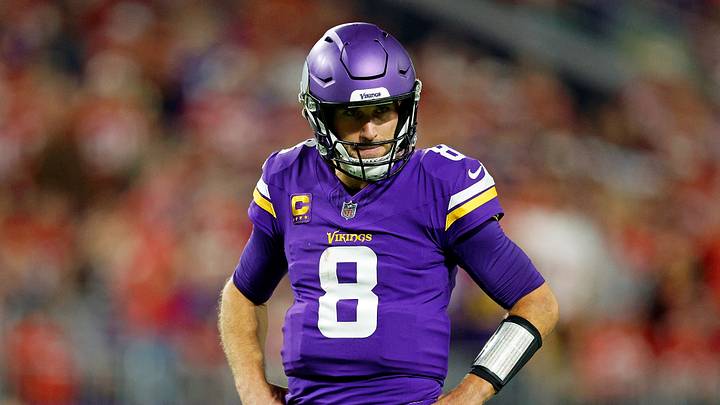
Desperate for a quarterback, the Vikings coughed up a 2027 third-round pick to the Las Vegas Raiders to acquire Cousins and it feels like an attempt to make up for lost ground as they try to fix the position. But the pursuit of trying to become “super competitive” may have caused long-term damage that backed them into a corner in advance of the move and it’s the type of issue the Twins should look to avoid.
Minnesota Vikings’ Kirk Cousins reunion gives the Minnesota Twins a clear warning about their offseason plans
Compared to the Twins, the Vikings look like a model franchise. Unlike the Pohlad family, which infamously cut payroll after the team’s first playoff win since 2004 and its first series win since 2002 during the 2023 season, the Wilf family built TCO Performance Center in Eagan and contributed approximately $600 million to the construction of U.S. Bank Stadium, which opened in 2016.
While the Wilfs have been able to spend, they’ve also been vigilant in their desire to be a competitive team. Since buying the franchise in 2005, the Vikings have won fewer than six games twice and haven’t dropped below seven wins in a season since posting a 5-10-1 record in 2013.
If there’s one quality about the Wilfs, you can say they care. That’s a big reason why some fans were hoping the Wilfs would buy the Twins when they were up for sale following the 2024 season. But while the Vikings have won plenty of regular-season games, their last playoff win came in 2019 and they haven’t made the playoffs in back to back year since the 2008 and 2009 seasons.
Wanting to be a competitive team every year isn’t a bad thing, but it also caused the Vikings to hang on to things that just weren’t working. When Cousins, head coach Mike Zimmer and general manager Rick Spielman were on the verge of getting fired in 2019, a playoff win over the New Orleans Saints earned them all contract extensions and saw the Vikings go 15-18 over the next two years before Spielman and Zimmer were fired.
In the case of Cousins, the regime led by head coach Kevin O’Connell and former general manager Kwesi Adofo-Mensah gave Cousins another extension when they took over in the spring of 2022. But Cousins left to sign a four-year, $180 million contract with the Atlanta Falcons after the 2023 season, the Vikings won 14 games with Sam Darnold before a 9-8 campaign with J.J. McCarthy in 2025.
Kyler Murray took the reigns in 2026, but while he started 6-0, he couldn’t generate enough offense before he suffered a hamstring injury. And with Carson Wentz struggling, the Vikings crawled back to Cousins on Tuesday.
The Vikings could win a Super Bowl with Cousins and for Twins fans begging for a big move, that sounds like a good deal. But it also pales in comparison to the Chicago Bears, who ripped everything down to the studs and engaged in a full rebuild that helped them select Caleb Williams with the No. 1 overall pick in the 2024 draft.
In addition, the Bears have a core that seems built for the long haul, while the Vikings may be operating in a one-year window with key players such as Andrew Van Ginkel, Blake Cashman and T.J. Hockenson set for free agency next spring.
Twins should avoid making the same desperate moves as the Vikings
Twins fans may look at this and wonder what it has to do with them. But they’re facing a similar crossroads as they enter the offseason. While Pohlad wants to forge ahead in an effort to lend an olive branch to fans, it may not be the best choice for a franchise that is known for second-half collapses more than playoff success in recent years.
Leaning into the future may also create more intrigue than leaning on the same players. Brooks Lee and Luke Keaschall are getting more comfortable with their experience in the major leagues. But Walker Jenkins, Kaelen Culpepper and Emmanuel Rodriguez made their debuts last summer with other top prospects, including recent first-round picks Marek Houston and Vahn Lackey on their way to the majors.
With this in mind, the Twins could smash their head against the wall, pay up for complementary pieces and make the same knee-jerk moves that they made at last year’s trade deadline (and like the Vikings did for Cousins). But that may also not win back Dan from Woodbury, who is still mad that Pohlad’s grandfather, Carl, offered the team up for contraction in the 2000s.
It may also not make sense from a baseball perspective after three small-market teams participated in the championship series last year. That includes the Milwaukee Brewers, who won the World Series after finding and developing homegrown talent and spending money to lock them in for a sustainable organization.
That sounds like a better idea than trying to prop up a 77-85 team that nobody is attached to and it could prevent the Twins from having the desperate, knee-jerk move the Vikings had to make on Tuesday afternoon.
 Add us as a preferred source on Google