

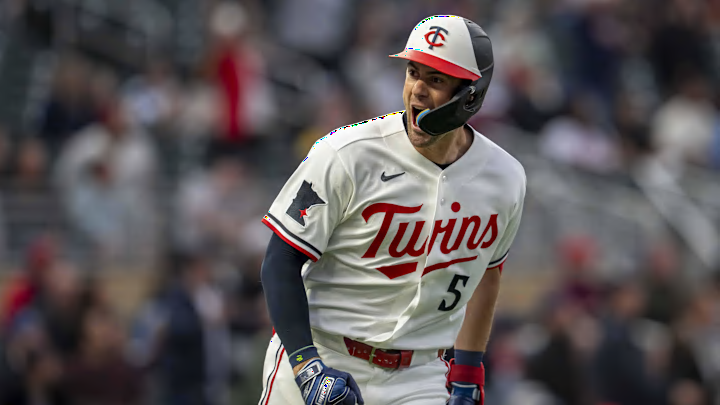
Garrett Crochet doesn’t get hit like that very often. When he does, it tends to create more questions than answers—and that’s exactly what we saw after the Twins got to him on April 13. One of the more immediate reactions wasn’t about execution or approach, but speculation. Cheating. Something is off. Anything other than what actually happened. That reaction, more than the outing itself, is what stood out.
As covered earlier today on Puckett’s Pond, the result itself left plenty of people searching for explanations. The outcome wasn’t just surprising—it disrupted expectations. But the answers don’t have to be that complicated.
When dominance meets resistance
The reaction to Monday's game split almost immediately, and didn’t take long to circle back on itself:
I’m down to start the investigation into this massive Twins cheating scandal.
— Steve Perrault (@Steve_Perrault) April 14, 2026
Garrett Crochet tonight in MIN:
— Gordo (@BOSSportsGordo) April 14, 2026
1.2 IP, 9 H, 11 R (10 ER), 3 BB, 0 Ks
Speechless. We’ve never seen Crochet that powerless. Tipping? Who knows. But velo was down and he had command of nothing. Hope he’s ok physically. Gonna take a year to recover the ERA. pic.twitter.com/bKOvWq4sji
Tarik Skubal, Framber Valdez, and Garrett Crochet at Target Field in the last week:
— Will Ragatz (@WillRagatz) April 14, 2026
11 innings pitched, 28 hits, 7 walks, 22 earned runs. That's an 18.00 ERA for the three All-Star lefties.
And it didn't stop there. In a Red Sox fan group on Facebook, the same conversation was playing out in real time. The thread pushed the idea even further—leaning into suspicion and trying to make sense of the outing through the idea that the Twins had to have cheated by listening in on the pitcher-catcher calls. But just as quickly, other fans pushed back, pointing to execution, approach, and the reality that even top-tier pitchers get hit. That contrast matters. It shows how quickly the focus can shift from the reality of a well-executed offensive gameplan to wild speculation and accusations.
When a pitcher with Crochet’s high profile gets hit, there’s a tendency to look for an external explanation. It couldn’t just be the hitters. We’ve seen this play out across the league. When pitchers like Tarik Skubal or Framber Valdez have off outings, most recently against the Twins, the conversation often turns quickly—away from the opposing lineup and toward what must have gone wrong on the mound. Tells you all you need to know, and even more about how other fan bases view our hometown team.
Pitch tipping is a part of the game
If there’s a legitimate baseball explanation in games like this, it’s pitch tipping. And if that’s part of what happened, it still doesn’t point to anything improper. That’s on the pitcher.
Hitters are trained to look for patterns—glove position, tempo, release cues. If something is there to be picked up, good lineups will find it. That’s preparation, not rule-breaking. MLB has even tightened rules in recent years around base coaches and the use of positioning or technology to relay signs. The line is clearly defined. Recognizing patterns from the field or from prep work isn’t crossing it. Calling that “cheating” shows a misunderstanding of how the game is actually played.
The injury assumption arrived quickly after Crochet got shelled by Twins
The other place the conversation goes is physical. Maybe Crochet wasn’t right. Maybe the stuff just wasn’t there. Maybe something’s going on that hasn’t come out yet. And sometimes that’s fair. There were at least small things people could point to—his velocity looked a little down—but nothing you can hang a real conclusion on. A dip like that happens. It doesn’t automatically mean something’s wrong.
What stood out more was how quickly that became the explanation. Before anything was confirmed, before there were reports—just an assumption layered onto the result. That says more about expectation than anything we actually know.
Execution doesn't need an excuse
There’s a better, cleaner explanation that doesn’t require any speculation: the Twins executed.
They were on time. They stayed disciplined. And when they got pitches they could handle, they didn’t miss them. That’s what good offensive baseball looks like—especially against high-end pitching. Even elite arms have nights where the other side wins. Crochet himself, in an article from MassLive, admitted that his control was not there and the Twins made him pay with their hitting approach. This, from the pitcher in question! No excuses, credit where credit was due. How refreshing!
What happened wasn’t confusing. What’s confusing is the need to explain it away. The Twins didn’t expose something suspicious or nefarious. They showed what it looks like when a lineup is prepared and confident against a pitcher—even one with Crochet’s reputation. If that approach holds, the conversation around this team won’t stay where it is for long.
 Add us as a preferred source on Google