

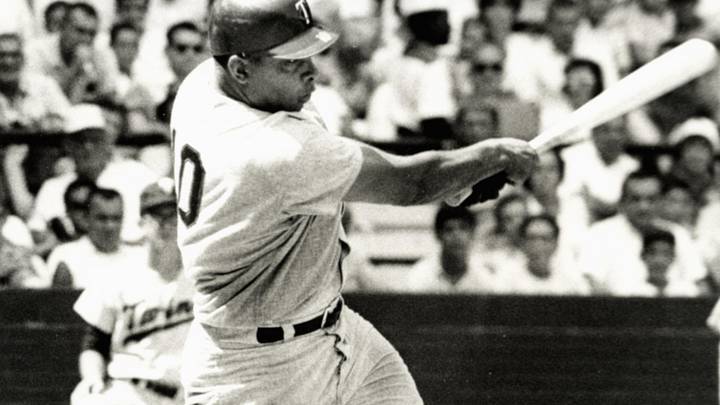
If it wasn't enough excitement that MLB had been brought to Minnesota in 1961, we go to July 4th of that season. The Twin Cities didn’t have to wait for the sun to go down to see fireworks. The real pyrotechnics happened in the middle of the hot July afternoon at Metropolitan Stadium (a.k.a. The Met).
It was the first game of a holiday doubleheader against the Chicago White Sox. More than 30,000 fans packed the Bloomington stands, eager for a holiday win but watching their new team fall behind. By the bottom of the ninth inning, the Twins were trailing 4–2 with two outs. The situation felt bleak, but a classic baseball rally began to cook in the summer heat. Bob Allison singled. Catcher Earl Battey kept the line moving with a base hit of his own. Then, a walk to Lenny Green loaded the bases.
With the game on the line, acting manager Sam Mele called on Julio Becquer to pinch-hit. Becquer wasn't an everyday star. He was a utility player hitting just .238 overall that season. But Becquer had an absolute obsession with preparation. His teammates noted that he routinely arrived at the ballpark hours before anyone else, taking extra batting practice to master one of the hardest jobs in baseball, coming off the bench cold to pinch-hit.
The White Sox called in veteran right-hander Warren Hacker to shut the door. The stadium swelled with excitement as Becquer stepped into the batter's box, looking for a pitch near the plate. The crack of the bat was instant. The ball soared deep into the afternoon sky, carrying over the right center fence at the 365-foot sign. A thrilling, two-out, walk-off grand slam!! The stadium erupted into pure elation as Becquer trotted around the bases, cementing himself in the annals of Twins lore.
Becquer’s grand slam made history in more ways than one
In a bizarre twist of baseball history, Becquer’s blast was the first of its kind, as Chicago's rapid-fire pitching changes during the rally led to each of the four runs scored being charged to a completely different White Sox pitcher.
Becquer’s career eventually wound down, but his connection to the state remained. He settled in the Minneapolis area, working in sales and frequently attending games. On that afternoon in 1961, his relentless work ethic met the perfect moment, delivering the first great Fourth of July memory in Minnesota Twins history. Hopefully our current Twins can provide more fireworks as we continue into the 2nd half of the season!
 Add us as a preferred source on Google