

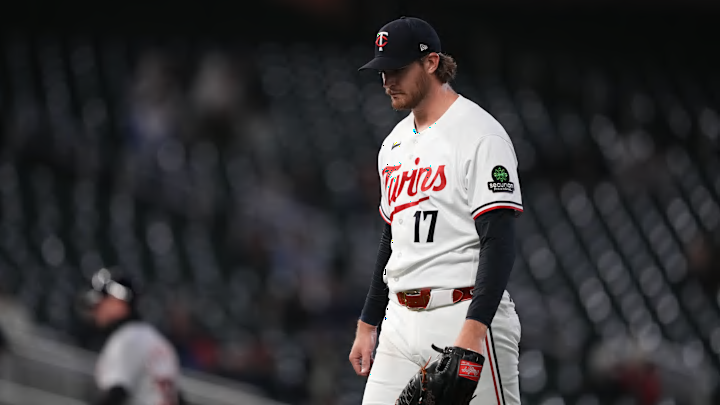
Cold weather is always part of the conversation this time of year in Minnesota. It’s an easy explanation—and in some cases, a fair one. But it doesn’t fully explain what’s happening at Target Field right now. The early April temperatures haven’t changed. The MLB season calendar hasn’t changed. And yet, the feel around the ballpark has. The empty seats aren’t just noticeable—they’re becoming part of the story.
Looking at the Twins’ Early Attendance Woes: Weather or Something More
Is It the Weather?
There’s no denying the obvious. The weather argument isn’t inherently wrong right out of the gate. April baseball in Minnesota can be cold, unpredictable, and downright uncomfortable. Weeknight games only make that more difficult, especially when temperatures dip, and the wind cuts through the ballpark. Fans have always been selective this time of year. Attendance tends to increase as the weather improves, the school year winds down, and routines shift into summer. In that sense, what we’re seeing now isn’t entirely new. The conditions matter, and they always have.
But the weather argument alone doesn’t fully add up. The problem is that the current drop feels different—not just lower, but quieter. Cold weather has been part of Twins baseball for decades, including seasons where Target Field still felt full enough to carry energy through the ballpark. This year, that energy has been harder to find.
It shows up not just in the stands, but in the background of almost every broadcast—empty sections visible in routine camera shots, to the point where it’s becoming difficult not to notice. It’s also starting to show up beyond the local broadcast. The visuals are circulating, the numbers are being mentioned, and the conversation is beginning to reach a national audience. Even moments designed to build energy, like the April 6 night game, only seemed to highlight the contrast.
Over/Under 200 fans in attendance for the SNF theme Twins intros pic.twitter.com/czbb2ED17p
— MyBookie - Bet With The Best (@MyBookie) April 7, 2026
The early numbers only reinforce that feeling. Through the first six home games, the Twins have drawn 102,905 fans—an average of just over 17,000 per game. At that pace, they would finish around 1.39 million in total attendance, a significant drop from last season and one that would put them deep into historically low territory for Target Field.
If it were only about temperature, the expectation would be a gradual dip—not the kind of noticeable emptiness that’s becoming harder to ignore. That’s where the question starts to shift.
Is It Something Else?
Attendance isn’t just about comfort—it’s about connection. Fans will sit through cold, rainy spring weather when they feel invested in what they’re watching. Right now, that connection feels less than certain.
The team itself hasn’t helped settle that feeling. Inconsistent play early in the season has made it difficult to get a clear read on what this group is. One night looks promising, the next feels disconnected. That kind of uneven performance doesn’t just affect the standings—it affects how fans choose to invest their time.
Recent comments from Twins ownership haven’t exactly settled anything. The message has leaned toward patience and internal solutions, even as expectations outside the organization remain higher. That gap—between what fans expect and what they’re hearing—absolutely matters.
At the same time, there’s been talk/rumors about possible cutbacks at Target Field. Whether all of it is confirmed or still developing, that kind of perception doesn’t just go away—and it shapes how fans view the direction of the organization.
Taken together, it creates a sense of hesitation. Not necessarily frustration, and not necessarily disengagement—but a pause. A quiet question that starts to creep in: is it worth the cost right now?
And when that feeling takes hold, it doesn’t show up in headlines first. It shows up in attendance.
What's the Answer?
The weather will always be part of the equation in Minnesota. It always has been. When the seats stay empty even after accounting for that, it points to something more than just cold nights in April. The real answer isn’t one thing—it’s a combination of how this team is playing, how it’s being presented, and how it’s perceived by the fans that fill the seats.
Right now, that combination is hard to ignore.
 Add us as a preferred source on Google