

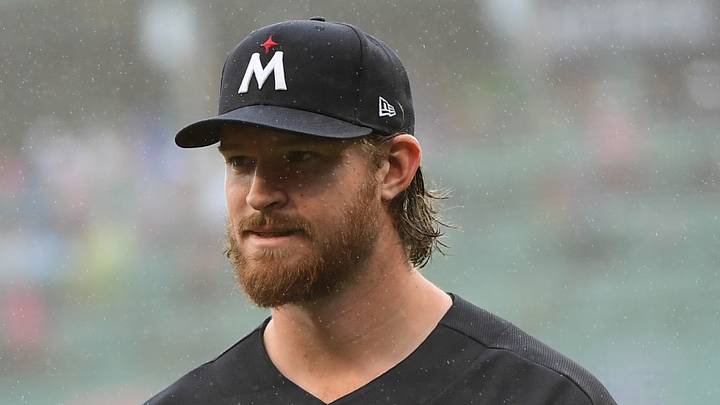
The Minnesota Twins' decision to reunite with veteran right-hander Sonny Gray on a two-year, $55 million contract significantly alters their offseason roster math, putting Bailey Ober squarely on the non-tender bubble ahead of Friday’s deadline. Several converging factors explain why Minnesota may choose not to offer Ober salary arbitration for 2027.
3 reasons the Twins could let Bailey Ober go after signing Sonny Gray
1. Payroll Crunch and Cost Efficiency: After starting the offseason with roughly $124 million in projected payroll, the Twins rapidly added nearly $50 million in commitments by retaining catcher Ryan Jeffers on his $23.15 million qualifying offer and signing Gray at a $27.5 million average annual value. With Pablo Lopez also returning at $21.75 million, Minnesota is approaching franchise record payroll territory. Ober, entering his final year of arbitration eligibility before free agency, is projected to earn roughly $6.9 million in 2027. Non-tendering him immediately frees up nearly $7 million that the front office can redirect toward pressing needs in the bullpen or on the right side of the infield.
2. Rotation Crowding and Cheap Depth: Signing Gray locks down a top rotation spot alongside Lopez, Joe Ryan, and Taj Bradley. That leaves just one or two openings, depending on whether Minnesota carries a sixth starter, for a massive wave of internal candidates. The Twins already have another arbitration-eligible veteran in Dean Kremer alongside younger, pre-arbitration arms like Zebby Matthews, Connor Prielipp, David Festa, Mick Abel, and Kendry Rojas. Because Ober is out of minor league options, he cannot be stashed in Triple-A, and paying nearly $7 million for a pitcher who might begin the year on the outside of the rotation is an inefficient use of resources.
3. Declining On-Field Metrics: Ober’s performance trends also make him expendable. During the 2026 season, he posted a 4.47 ERA and a 4.61 FIP across 131 innings, while his strikeout rate dipped to 17.1%, well below his career mark of 22.7%. With declining velocity and diminished bat-missing ability, his profile looks increasingly like a replaceable back end starter.
Unless the Twins can find a quick trade partner prior to the tender deadline, letting Ober walk as a free agent gives Minnesota maximum financial and roster flexibility following the Gray splash. Minnesota is showing some early aggressive maneuvers to put together a team the fans can get behind and some back into the seats. This is as busy as the Twins have been in the off-season for quite some time, setting an upbeat tone for 2027.
 Add us as a preferred source on Google