

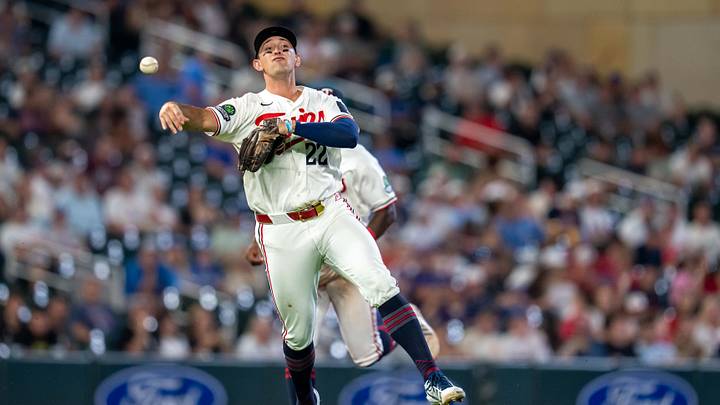
It's easy to blame subpar pitching for the Minnesota Twins' losing 2026 season. With a rotation that suffered numerous brutal injuries and one of the league's worst bullpens, pitching was certainly one of the main reasons the Twins failed to make the playoffs, as their offense ranked second in the American League in runs scored. However, another huge reason for Minnesota's 77-85 record was its poor defense.
In 2026, the Twins ranked No. 28 in Defensive Runs Saved (-36) and No. 20 in Outs Above Average (-15). They didn't make many errors, but limited range cost them runs, leading to more losses. If the Twins had a top-tier defense in 2026, the season could've ended much differently.
The pitching staff looks well on its way to improving next year. Pablo López will be back after missing the entire 2026 season due to UCL surgery. Sonny Gray re-joined the team on a two-year, $55 million contract. Minnesota will get full seasons out of Jeff Hoffman, Dean Kremer and Tommy Nance. Plus, the acquisition of Bobby Miller from the Los Angeles Dodgers in the Royce Lewis trade could be a major boost to the bullpen.
The Twins' defense should be much better in 2027
Additionally, the Twins' defense should be much better in 2027. Minnesota non-tendered outfielders Trevor Larnach, who posted -8 DRS and -5 OAA in 2026, and Matt Wallner, who spent most of the 2026 season in Triple-A but still recorded an abysmal -9 DRS and -4 OAA in only 284 innings for the Twins.
The Twins' outfield defense should be much better next year. Byron Buxton is still an elite defender, Emmanuel Rodriguez posted +6 DRS in 115 2/3 innings with Minnesota this year, and Walker Jenkins is considered an above-average defender. Right fielder Luke Keaschall has struggled defensively, but he is hard-working and athletic, so he could easily improve defensively.
Now let's look at the infield. Catcher Ryan Jeffers, who accepted Minnesota's $23.15 million qualifying offer, is about average at blocking and framing, but he is excellent at using the ABS challenge system. Jeffers is no Joe Mauer behind the plate, but he's good enough.
The Twins can count on Brooks Lee to play excellent third-base defense next year. He recorded +8 DRS and +6 OAA after moving from shortstop to third base in May, earning him a Gold Glove finalist nod. He struggled significantly at shortstop, posting -9 DRS and -6 OAA, so his complete absence at shortstop next year should improve the team's defensive metrics.
Kaelen Culpepper will most likely be the starting shortstop next year. While many questioned whether he could stick at shortstop long-term, he proved he can play the position well in the majors, posting +1 OAA in 281 innings last year. Twins shortstop prospect Marek Houston, known as an elite defender, could also make his MLB debut next year.
Then we have first and second base. It's unclear how those positions will look next year now that Lewis is gone. Kody Clemens will most likely play one of the positions. Clemens is a strong defender at both first and second. General manager Jeremy Zoll said he plans to add to the offense, meaning Minnesota's starting first baseman or second baseman will likely come from outside the organization. Alan Roden and Gabriel Gonzalez are internal options.
The Twins also released Tristan Gray at the end of the season, another reason why the defense should improve next year. Gray posted -7 OAA and -7 DRS in 277 1/3 innings at shortstop this year.
If the Twins' defense and pitching staff improve as expected, and the offense continues to produce, it isn't far-fetched to suggest that Minnesota could be a top AL contender next year.
 Add us as a preferred source on Google