

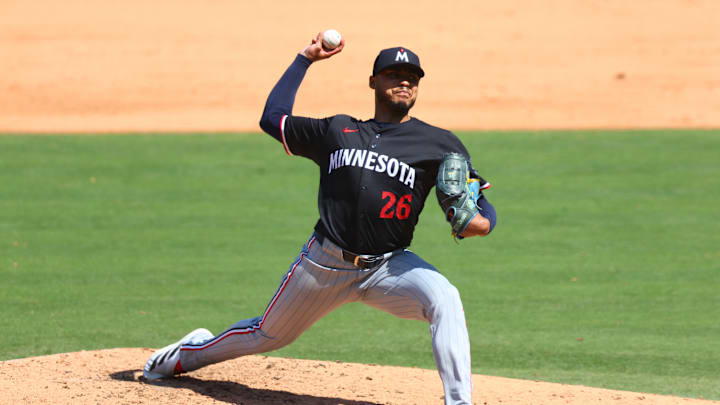
The Twins franchise finds itself at a competitive crossroads following back-to-back losing seasons and a payroll that has plummeted to roughly $106 million, nearly $70 million below the league average, sparking debate on a future MLB salary floor. As the team progresses through spring training in Fort Myers, the central narrative is no longer about right-sizing their business model, but about whether a cash-strapped organization can remain competitive in 2026 and plan for a brighter future. The reality of injuries that come with the season is forcing a continued rebuild, all with the backdrop of a possible 2027 MLB lockout.
Will the Twins be competitive in 2026 despite low payroll, multiple injuries?
Injuries begin an early manifest
The most devastating blows to the 2026 campaign came before a single regular-season pitch was thrown. In late February, staff ace Pablo López underwent surgery to repair a significant tear in his UCL. While the use of an internal brace offers hope for a 2027 return, his absence for the current season leaves a gaping hole at the top of a rotation that was already thin. Unfortunately, trading him before a potential 2027 lockout season is now extremely difficult with his lost draft capital. This crisis is compounded by a shoulder injury to promising young starter David Festa and the health concerns surrounding Royce Lewis and Joe Ryan, who were recently scratched from spring action due to muscle tightness.
Prospects come into focus for future reinvention
However, within this doomsday scenario lies the potential for a radical youth movement. With ownership unwilling to spend on pricey veteran replacements, the Twins are forced to hand the keys to their developmental pipeline. All eyes are on Walker Jenkins, the 21-year-old phenom and consensus top-five global prospect, who may make his MLB debut this summer. Alongside him, players like Kaelen Culpepper and the red hot Emmanuel Rodriguez represent a new, cheaper, and theoretically more dynamic core. Ryan Jeffers will likely hit the free agent market after this season (trade bait?), forcing the ascension of Eduardo Tait to be imperative. Taj Bradley is showing he wants the opportunity that the Lopez injury has created. The 2026 season will serve as a high-stakes laboratory to see if these and other future prospects can accelerate their timelines to fill the void left by departed stars.
A season of forced reinvention
Ultimately, the 2026 Twins are an experiment in organizational resilience. The tension between a frustrated fan base and the Pohlad family’s fiscal conservatism has reached a breaking point where resorting to cheap beer and free ice cream has become an inspirational calling card. For the 2026 Twins to remain relevant, they must instead hope their roster can defy the analytic spreadsheets. Whether this season is remembered as the crux of a franchise decline or the birth of a gritty new era depends entirely on how quickly the "Next Generation" can grow up under the bright lights of Target Field.
 Add us as a preferred source on Google