

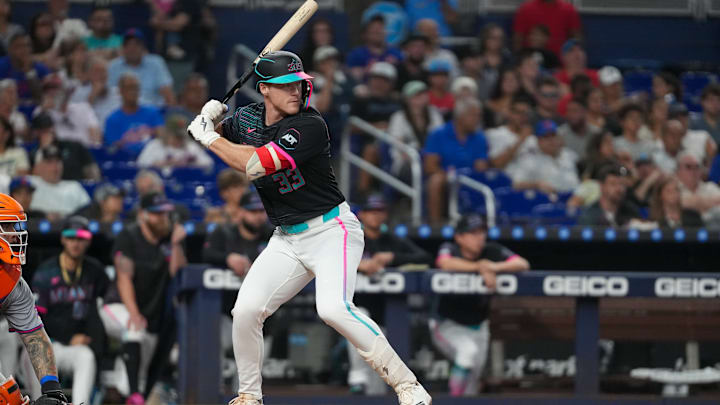
On January 2, 2026, the Minnesota Twins acquired first baseman/utility man Eric Wagaman from the Miami Marlins in exchange for minor league left-hander Kade Bragg. At its core, this is a classic depth-for-depth low-cost swap. It certainly doesn't improve their C-grade offseason moves to date. For a Twins team looking to stabilize a volatile roster, the move predictably carries both quiet intrigue and notable risks.
The Pros: Versatility and Platoon Potential
The primary draw for Wagaman is his ability to lengthen the bench. Standing 6’4”, he offers a massive target at first base, where he spent the majority of his 2025 rookie season. He certainly gives the Twins a better defensive option than Josh Bell. He has some defensive flexibility, as he's played third base and both corner outfield spots.
Offensively, the Twins likely see a potential platoon weapon with Bell and/or Kody Clemens. In 2025, Wagaman posted a respectable .783 OPS against left-handed pitching, a significant jump over his overall .674 mark. With the Twins often leaning heavily on left-handed bats like Matt Wallner and Trevor Larnach, Wagaman provides a right-handed alternative who can hopefully punish southpaws. Furthermore, his strong finish in September 2025, where he hit .328, suggests there may be more ceiling to his bat than his career averages imply.
The Cons: Limited Ceiling and Roster Sacrifice
The downside is that Wagaman is already 28 years old with a profile that screams "replacement level." His metrics indicate a hitter who has been below league average, which is particularly concerning for a player limited to corner positions where high offensive production is the standard. Skeptics point to his .296 on-base percentage as proof that he lacks the ability to be a consistent MLB starter. Being DFA'd from two teams in two years certainly inspires caution.
To make room for him, the Twins DFA’d Ryan Fitzgerald, a fan favorite whose versatility and late career surge provided a spark last season. By choosing Wagaman over Fitzgerald, the Twins are betting that Wagaman's defensive metrics and right-handed splits are more valuable than Fitzgerald's left-handed utility. Additionally, losing Kade Bragg, a 24-year-old lefty who impressed in Double-A last year, is a gamble on the bullpen’s future depth.
Conclusion: Wagaman trade is a classic, calculated Twins move
The Eric Wagaman trade certainly isn't an inspiring blockbuster, but a classic Twins low-cost, calculated move to find a specific role player. They gain a cost-controlled right-handed bench bat with some positional flexibility. Whether this is a savvy "buy low" or simply rearranging deck chairs will depend on whether Wagaman can maintain his September momentum into the 2026 season.
 Add us as a preferred source on Google